In the late 1960s, a small group of psychologists, including Abraham Maslow and Anthony Sutich, began to articulate a broader vision for their field. They described four major forces shaping American psychology: behaviorism, psychoanalysis, humanistic psychology, and a then-emerging perspective they called transpersonal psychology. Referred to as the “fourth force,” transpersonal psychology aimed to extend psychological inquiry beyond the individual self, opening it to questions of meaning, spirituality, and the deeper dimensions of human experience. Early definitions reflected this ambition, with Sutich offering a comprehensive account in 1969, and later Roger Walsh and Francis Vaughan describing it more succinctly as a psychology that integrates the spiritual and transcendent within a modern framework.
Although this way of thinking about human nature is relatively new within mainstream Western psychology, the perspective it represents is far older and widely distributed across cultures. Variations of this view can be found in African-centered psychology, as reflected in the work of Linda James Myers, as well as in ancient Egyptian (Kemetic) thought, which understood the human being as inseparable from spiritual and cosmic realities. Comparable orientations appear in many Indigenous traditions of the Americas, in Asian philosophical and spiritual systems, and in strands of classical European thought. Across these traditions, the psyche is not treated as an isolated phenomenon, but as embedded within a larger, meaningful, and often sacred order of reality.
Maslow, Sutich, and their colleagues understood these four forces—behaviorism, psychoanalysis, humanistic psychology, and transpersonal psychology—as distinct approaches to studying the human being. As a student, I found myself drawn to each of them in different ways and began studying their ideas more deeply over time. It was during my graduate work that a unifying insight began to take shape: the possibility that these four approaches correspond to the four psychological functions identified by Carl Jung—sensing, thinking, feeling, and intuiting—and may be understood as different expressions of these fundamental ways of knowing.

Jung described the four functions in Psychological Types as follows: “Sensation establishes what is actually present, thinking enables us to recognize its meaning, feeling tells us its value, and intuition points to possibilities as to whence it came and whither it is going” (pp. 540–541).
The functions are configured in the human psyche with thinking and feeling existing at the opposite ends of the same axis. Existing at the opposing ends of a second overlapping axis are sensing and intuiting. Together, the four functions represent our means and ways of knowing and understanding reality and all aspects of the human experience while mirroring aspects of the fourfold structure of the psyche. Worthy of note is that the two overlapping axes form a cross which can be referred to as a Jungian cross.

The single function (which can be any one of the four) situated at the north end of the cross is called the superior function. It represents the most dominant and developed function. Opposed to this function is the inferior function which has a special and unique role to play in an individual’s movement towards wholeness. Superior and inferior functions can also be identified in “the psyche” of the people of a nation or culture; and so, too, when identified, the inferior function may potentially, if not surprisingly, reveal a means to wholeness for an individual and/or the people of a nation—and yet, there is typically a price to pay on the journey to wholeness, as there are often considerable challenges to overcome in trying to integrate the inferior function with the other three in an effort to bring about a robust fully functioning psyche—especially, when elements of the shadow (a prominent archetype in Jungian psychology) are attached to the inferior function. According to Jung, the shadow contains repressed qualities that are unacceptable or undesirable—and, thus, are readily rejected by the conscious mind.
Regarding an individual in relation to the four functions, the ego generally comes to experience three of the psychological functions as helpful. They must, however, occupy the positions of superior, first auxiliary, and second auxiliary functions—or in other words, the positions of North, West and East, respectively, on the Jungian cross. The ego experiences its greatest comfort with the superior function (i.e., the one that develops first in consciousness) while over a period of time, a person’s ego learns to recognize the usefulness of a second function (usually called the first auxiliary function), and a third function that may be called the second auxiliary or tertiary function.
The fourth remaining function (i.e., the one located at the South point of the Jungian Cross) is always the inferior function. Although it ultimately offers an important pathway toward psychological wholeness, it frequently generates discomfort, frustration, and anxiety whenever the ego encounters it or attempts to rely upon it. From the standpoint of the ego, the inferior function often appears unreliable or deficient, regularly falling short of the standards established by the dominant function. Because it is inferior and therefore the opposite of the superior, dominant function, the domain of experience to which it provides access is typically the least valued or least trusted by the conscious personality. Situated close to the unconscious, the inferior function may also serve as a channel through which aspects of what Jung called the shadow can emerge into awareness, bringing with it both the disturbances and developmental possibilities that accompany encounters with previously unrecognized parts of the psyche. At times, similar dynamics can also appear at the cultural level. For example, when certain human qualities or ways of knowing are collectively devalued, they may be projected outward onto others or onto marginalized groups, becoming part of what analytical psychology would describe as the collective shadow of a society.
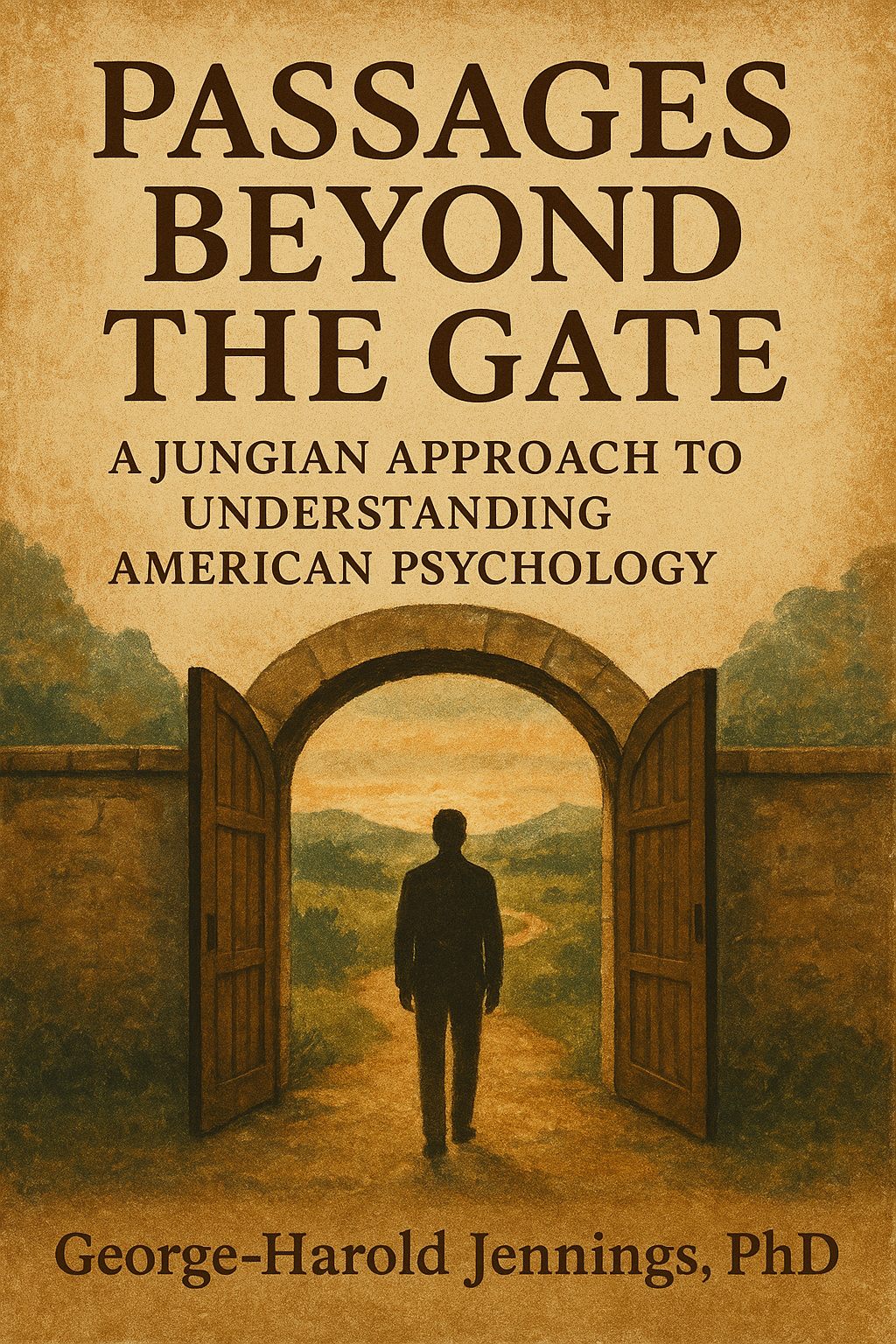
In my book Passages Beyond the Gate: a Jungian Approach to Understanding American Psychology (2010, ebook 2012), I discuss how these four psychological functions give rise to four strikingly different ways of knowing which we find in psychology. In American psychology they unfold in a dynamic and readily identifiable way.

As the functions begin to differentiate within the psyche of an individual, the order is such that the first to develop is the superior or dominant function. This dynamic process determines which function will become the “troublesome,” unruly function, and that function is always the opposite function of the superior function. Two more functions will over time differentiate and become controllable and reliable (to varying degrees).
Over time things stabilize, and the ego realizes it has three functions that it can effectively use, but one that is unreliable, difficult to manage, and thus often devalued. This dynamic is aptly named the problem of the three and the one. It is a dynamic process that can be seen not only in an individual, but in a discipline—such as psychology, which in itself mirrors and identifies dynamics and those things of importance in the psyche of groups that comprise cultures and nations.
If the first force in American psychology, represented by behaviorism, is grounded in the function Jung called sensation—then the alignments of the three remaining functions with the three remaining psychological forces point to psychoanalysis (the original psychodynamic psychology) being grounded in thinking, and humanistic (sometimes referred to as humanistic-existential psychology) being grounded in the feeling function. Transpersonal psychology grounded in intuition represents the inferior function in American psychology; consequently, being on the same axis, it is opposite behaviorism which is grounded in sensation. With this in mind, the argument can be made that behaviorism (essentially, the tenets it rests upon that are consistent with the traditional scientific method) is not only the first force in American psychology, it also is a manifestation of sensation, the superior function in American psychology.
There is a split in the thinking among transpersonalists regarding the means and ways one should go about studying transpersonal phenomena. On the one hand, there are those adherents, practitioners, and researchers who are compelled to explore ideas, acquire knowledge, and gather information gained only from identifying and exploring measurable phenomena. There are others who embrace a different, if not, expanded or broader view of the transpersonal that calls for the exploration and gathering of information in realms that go beyond the concrete, and measurable aspects of reality. Still, some transpersonalists, like myself, believe both approaches are important, and should be pursued.
In order for transpersonal psychology to provide its ideal and unique contribution to American psychology, it must establish and maintain a firm foothold in the metaphysical dimensions of knowledge and reality. This requirement, however, reveals the central paradox captured in the title of this article: the very condition that gives transpersonal psychology its greatest promise is also the source of its greatest problem. Its commitment to metaphysical inquiry and spiritual values when integrated with the practical applications of scientific understanding positions it to offer a more complete vision of human life. Yet, this same commitment places it at odds with the dominant assumptions of American psychology.

This tension is not unique to transpersonal psychology, but reflects a deeper and long-standing question within the discipline itself: What is psychology? Is it properly defined as a science, or is it more accurately understood as a field that can be approached through both scientific and non-scientific modes of inquiry? Some of the most influential figures in the history of psychology have resisted reducing the discipline to a purely natural science. William James, often regarded as the father of American psychology, realized psychology aspires to scientific rigor, but its subject matter resists reduction to the methods of natural science. Further, he recognized psychological life cannot be separated from religion, philosophy, and lived experience.
This broader view continued into the humanistic and existential traditions. Carl Rogers and Abraham Maslow argued that scientific methods alone are insufficient to capture the full reality of the person, particularly those dimensions involving meaning, value, and self-transcendence. Likewise, Rollo May emphasized that psychology must also engage interpretive and phenomenological modes of understanding if it is to remain faithful to human existence. From this historical perspective, psychology emerges not as a discipline reducible to science, but as one that can be studied scientifically while also requiring modes of inquiry that extend beyond empirical measurement.
The problem, then, becomes more clearly defined within the context of American psychology. As reflected in its leading academic institutions and dominant research paradigms, American psychology places a disproportionately high value on the sensing function. While indispensable, this emphasis fosters a materialistic view of reality and promotes an overreliance on science as the primary—if not exclusive means of understanding and improving human life. Traditional science, grounded in this framework, tends to deny or disregard the spiritual dimension of existence. It seeks to describe human beings through observable phenomena and measurable processes, and yet, repeatedly, human experience itself points beyond these limits, affirming the enduring truth that “man shall not live by bread alone” (Matthew 4:4).
Historically, this dominance of sensation has taken different forms. It was once most clearly expressed in behaviorism, and today it is reinforced through the widespread insistence on exclusively evidence-based approaches—methods that privilege quantification, measurement, empirical verification, and AI technology. Within such a framework, transpersonal psychology is often marginalized precisely because it is grounded in intuition and remains open to metaphysical realities.
Though often marginalized, transpersonal psychology has quietly contributed to the field’s evolution—most notably in the acceptance of mindfulness-based practices, the exploration of peak experiences, and the gradual acknowledgment that questions of meaning and spirituality belong within psychological inquiry. In this respect, what has long been regarded as peripheral or problematic has, in fact, contributed to the field. Even recent clinical research into psychedelic-assisted therapies, conducted under rigorous scientific conditions, has reopened questions of meaning, transcendence, and transformation, further illustrating that dimensions once considered outside the scope of psychology are re-emerging within it. Here again, its promise and its problem are inseparable: what enables it to expand the horizons of psychological knowledge simultaneously renders it suspect in the eyes of many in the mainstream.
A complete understanding of human nature requires the integration of all four psychological functions, corresponding to the four major forces in psychology. From this perspective, transpersonal psychology cannot be dismissed without impoverishing the field as a whole. Yet, in practice, it is the very approach most frequently ignored, resisted, or even ridiculed. In response, some transpersonalists, seeking broader acceptance, have attempted to align more closely with mainstream expectations by minimizing or abandoning the metaphysical dimension. In doing so, however, they risk diminishing the very essence of what gives transpersonal psychology its transformative potential.
At leading academic institutions across the United States, dominant approaches—behavioral, cognitive, biological, and related scientific frameworks—continue to reflect the primacy of sensation-based inquiry. Alongside these, psychodynamic and humanistic-existential perspectives maintain an important presence. Each of these approaches holds a legitimate place within the discipline; yet, without transpersonal psychology, the field remains fundamentally incomplete. Its exclusion is not incidental, but symptomatic of the deeper tension identified here: the difficulty of integrating a mode of knowing that challenges the epistemological boundaries of conventional science. The challenge is not to abandon science, but to recognize its limits: methods that have proven extraordinarily effective in the study of the physical world do not, by themselves, exhaust what it means to understand a human life. The rise of AI and computational models only sharpens this distinction—expanding our capacity to model pattern and prediction while leaving open, and perhaps even deepening, the question of meaning.
For American psychology to move toward wholeness, transpersonal psychology must be granted not only recognition but genuine inclusion. Only then can its contributions be fully realized. Over time, it may come to be understood that the insights derived from an intuitively grounded, spiritually informed psychology are not peripheral, but essential—complementing and completing the contributions of sensation, thinking, and feeling-oriented approaches.

Ultimately, American psychology should strive to embody the fullest expression of all four functions—to measure and quantify the material dimensions of existence; to interpret and explain, with clarity and rigor, the meaning of lived experience; to articulate the values that give direction and significance to human life; and to explore the metaphysical questions of purpose, origin, interconnectedness, and the human spiritual journey. From a transpersonal perspective, engaging these metaphysical questions—both symbolically and, where possible, scientifically, rather than avoiding them, is essential, for they illuminate a deeper truth: that human beings are not merely biological organisms, but fundamentally spiritual beings. It is precisely this vision that constitutes both the enduring challenge and the profound promise of transpersonal psychology.
Note: An earlier version of this article was published in the Association for Transpersonal Psychology Newsletter in 2021.
_______________________
Foundations & Further Reading
Maslow, A. H. – Toward a Psychology of Being
Sutich, A. J. – Founding editor, Journal of Transpersonal Psychology
Walsh, R., & Vaughan, F. – Paths Beyond Ego
James, W. – The Varieties of Religious Experience
Jung, C.G. – Aion
Jung, C. G. – Psychological Types
Jung, C. G. – The Archetypes and the Collective Unconscious
Myers, L. J. – Understanding an Afrocentric Worldview
Grof, S. – Beyond the Brain
Wilber, K. – Integral Psychology
Carhart-Harris, R. L. – Research on psychedelic-assisted therapy
Gray, T., Krippner, S., Ferrer, J., Ortigo, KM., Grof, S. – Newsletter 2021 – [PDF] atpweb.org
_______________________
Links
Bloomsbury Academic: https://www.bloomsbury.com/us/passages-beyond-the-gate-9780761851639/
Amazon: https://www.amazon.com/Passages-Beyond-Gate-Understanding-Psychology-ebook/dp/B009D0N3Z2

© 2026 George-Harold Jennings. All rights reserved. No part of this publication may be reproduced, distributed, or transmitted in any form without prior written permission.
Contact: gjenning@drew.edu