Category Archives: Science

At the Edge of the Psyche: What American Psychology Welcomes—and What It Rejects

I first heard the words transpersonal psychology as a graduate student at Pennsylvania State University in the late 1970s. I was introduced to the subject by one of the department’s many distinguished faculty members, William Ray, PhD, who also introduced me to the work of the Jungian analyst Marie-Louise von Franz. Having a professor like Dr. Ray introduce me to transpersonal psychology was, in some respects, surprising. His own research and publications were far removed from Jungian or transpersonal thought.

True to Penn State’s strong commitment to evidence-based research, his work focused on biofeedback and the interface of clinical psychology and psychophysiology—particularly EEG—as it related to anxiety, dissociation, emotionality, and individual differences. It was during one of our clinical team meetings, in conversation with a small group of students, that Dr. Ray mentioned transpersonal psychology. He described it as a relatively new approach to understanding human nature—still in its infancy, perhaps even in its toddler stage. Whether he intended the comment to invite deeper exploration, or simply offered it in passing, I do not know. What I do know is that something in that moment took hold.

Months later, that initial spark was further inflamed when I enrolled in a seminar on Carl Jung’s analytical psychology—taught, interestingly, by a professor whose published work remained grounded in physiological psychology. Around that same period, I made several trips to New York City to study Uranian astrology with Charles Emerson, founder of The Uranian Society, a subgroup of the National Council for Geocosmic Research. Trained in mathematics at Brown University, Emerson, a titan of 20th century astrology, had a rare ability to convey the complexity and symbolic depth of that system. Looking back, what stands out is not simply the range of these experiences, but the way they began to converge.

I had long been drawn to science. As a high school student in the late 1960s and early 1970s, I immersed myself in general science, biology, chemistry, and physics. Biology, in particular, held my attention. Yet even then, there were moments that left questions unresolved. During a discussion on the evolution of life, I remember asking—somewhat boldly—whether life might be understood as a kind of force, a type of energy. I expected at least a moment of consideration. Instead, the response was immediate and emphatic: no. Modern biology had moved beyond such notions. The term vitalism was briefly explained, and the class moved on. But I did not move on—not entirely.

Years later, I encountered related ideas in very different forms: Qi in Traditional Chinese Medicine, Prana in Indian philosophy, and later Kundalini—explored not only by Jung, but by figures such as Stanislav Grof, Christina Grof, Ken Wilber, and David Lukoff within transpersonal psychology. What these encounters gradually revealed was not simply a set of unfamiliar ideas, but a deeper divergence in how human beings—and human experience—are understood. On the one hand, the materialistic scientific viewpoint, grounded in measurement and empirical verification. On the other, a metaphysical orientation that approaches human life through meaning, symbolism, and the view that consciousness is not reducible to physical processes alone. These perspectives are often framed as competing with one another. More often than not, they remain separated—each developing along its own path. And yet, in contemporary psychology, something more complex is taking place.

Since its formal emergence in 1969—through the efforts of Abraham Maslow, Anthony Sutich, Stanislav Grof, and others—transpersonal psychology has continued to develop at the margins of the field. In recent decades, however, mainstream psychology has increasingly embraced a number of its tools, practices, and kindred ideas. At the same time, the broader worldview upon which transpersonal psychology rests has not been fully received.

This is the tension.

What is welcomed are the methods that can be adapted, studied, and applied within existing frameworks. What is more often held at a distance are the metaphysical assumptions—the deeper questions concerning consciousness, meaning, and the nature of human existence—that give rise to those methods in the first place. In this sense, American psychology stands at a kind of threshold. It has begun to incorporate insights that point beyond its traditional boundaries, yet it continues to hesitate at the implications of those insights.The integration, therefore, remains partial—not because the tools lack value, but because the worldview from which they emerge has yet to find a fully recognized place within the discipline.

Transpersonal Psychology has Contributed to American Pychology But It Has Much More to Offer

This infographic maps the evolving relationship between mainstream psychology and Transpersonal psychology, a sub-field that integrates spiritual and transcendent aspects of the human experience. The map highlights tools from Transpersonal psychology and its kindred ideas that mainstream American psychology readily embraces, those currently under consideration that have begun to draw its interest, and the practices and experiences grounded in a worldview it continues to reject.

​Below is a breakdown of the practices and worldviews categorized in the chart:

Fully Mainstream

​These are tools once considered “fringe” that are now widely accepted and backed by significant clinical research.

Mindfulness Meditation: A mental training practice that involves focusing your mind on your experiences in the present moment. It is used clinically to reduce stress, improve focus, and manage emotional reactivity.

​Breath-Focused Meditation: A foundational practice where the breath serves as an anchor for the wandering mind. It is a core component of many stress-reduction programs and physiological regulation techniques.

​Guided Imagery / Visualization: The use of mental images to evoke positive physical and emotional responses. It is frequently used in sports psychology and for pain management or relaxation in clinical settings.

Somatic Awareness Practices: Techniques that focus on the connection between the mind and the physical sensations of the body. These are essential in modern trauma therapy to help patients “ground” themselves.

​Acceptance-Based Practices: Strategies derived from therapies like ACT (Acceptance and Commitment Therapy) that teach individuals to embrace thoughts and feelings rather than fighting them. These focus on psychological flexibility rather than symptom suppression.

​Hypnosis & EMDR: Eye Movement Desensitization and Reprocessing (EMDR) and clinical hypnosis are evidence-based tools for processing trauma and modifying subconscious behaviors. Both rely on altered states of focus to facilitate healing.

​Flow-State Induction: The study and practice of entering a state of “optimal experience” where a person is fully immersed in an activity. Mainstream psychology uses this to enhance performance and well-being in work and creative fields.

​Spirituality-Sensitive Assessment: The practice of clinicians acknowledging and respecting a patient’s spiritual or religious background during diagnosis. It treats a patient’s belief system as a potential resource for coping and recovery.

​Emerging

​These practices are currently gaining traction in academic research and clinical trials, often showing high potential for therapeutic breakthrough.

​Psychedelic-Assisted Therapy: The use of substances like psilocybin or MDMA in a controlled, clinical setting to treat conditions like treatment-resistant depression and PTSD. This field is currently undergoing a massive “renaissance” in mainstream psychiatry.

​Compassion Meditation: Also known as “Loving-Kindness” meditation, this practice focuses on developing an altruistic state of mind. Research suggests it can significantly alter brain chemistry related to empathy and social connection.

​Nature-Based Practices: Often called “Ecotherapy,” these involve structured activities in natural environments to improve mental health. They are increasingly recognized for their ability to lower cortisol levels and combat “nature deficit disorder.”

Contemplative Movement: Practices like Yoga, Tai Chi, and Qigong that combine physical postures with meditative focus. They are emerging as powerful adjuncts to traditional talk therapy for holistic wellness.

​Dreamwork & Active Imagination: Techniques originally popularized by Carl Jung that involve engaging with the symbols and narratives of the subconscious. They are being revisited as tools for self-discovery and resolving deep-seated psychological conflicts.

Sound & Music Healing: The therapeutic use of sound frequencies, music, and vibration to regulate the nervous system, facilitate emotional release, and promote psychological coherence. Practices range from guided music therapy to immersive sound baths, often supporting trauma resolution and affect regulation.

Energy Psychology (EFT, Tapping, Meridian Work): A group of approaches combining cognitive focus with somatic stimulation of the body’s energy systems. Emotional Freedom Techniques (EFT) involves tapping on specific acupressure (meridian) points while focusing on distressing thoughts or emotions, with emerging evidence suggesting reductions in anxiety, stress, and trauma-related symptoms.

Integration Coaching: A meaning-centered, forward-facing process that helps individuals integrate insights from therapy, spiritual experiences, or life transitions into daily living. Emphasizes meaning-making, values clarification, and life alignment, bridging insight with sustained behavioral and existential change.

​Still Marginal

​These areas remain on the fringes of mainstream science, often because they are difficult to measure through standard empirical methods.

Holotropic Breathwork: A practice using rapid, controlled breathing to induce altered states of consciousness without drugs. It is intended to allow for deep emotional release and spiritual insight, though it lacks broad clinical validation.

​Archetypal / Subtle Energy Work: Practices based on the idea of an underlying “energy body” or collective psychological patterns (archetypes). While meaningful to many, these lack a measurable physiological basis in standard Western medicine.

​Near-Death Experience (NDE) Integration: Therapeutic support for individuals who have had profound experiences while clinically dead or near death. Mainstream psychology often views these as neurological hallucinations, while transpersonal psychology treats them as significant spiritual events.

​Shamanic & Ritual Methods: The adaptation of ancient indigenous healing traditions, such as soul retrieval or ceremonial drumming, for modern psychological use. These are marginalized due to their reliance on non-materialist frameworks of healing.

Consciousness Research: When focused on altered states—consciousness research is the systematic study of non-ordinary states of consciousness—including meditation, hypnosis, flow states, and psychedelic experiences—to better understand perception, identity, and cognition. It includes scientific exploration of phenomena such as telepathy, precognition, and non-local awareness using protocols designed to meet the standards of the scientific method sidestepping spiritual frameworks as explanations. Studies often employ controlled experiments (e.g., Ganzfeld procedures, random event generators) to test for statistically significant deviations from chance, while remaining subject to ongoing debate regarding replicability and interpretation.

A Synthesis of Scientific Insight and Timeless Wisdom Is Ideal

The most complete path to human development—ranging from healing to profound transformation—emerges when scientific understanding and enduring wisdom traditions are integrated; yet mainstream psychology often remains hesitant to accept, or explicitly rejects, the worldview embraced by transpersonal psychology.

Rejected Worldview by Mainstream Psychology

​These concepts represent the “hard line” where mainstream psychology typically stops, as they conflict with the materialist, scientific paradigm.

​Non-Material Consciousness: The belief that consciousness is not just a byproduct of the brain’s physical activity. Mainstream science generally maintains that the brain creates the mind, rather than acting as a receiver for it.

​Reincarnation & Past Lives: The idea that the soul or consciousness survives death to be reborn in a new body. This is rejected by mainstream psychology as it cannot be tested or verified through the scientific method.

​Survival Beyond Death: The belief that human identity or awareness persists after the biological death of the brain. While a common religious belief, it is outside the scope of empirical psychological study.

The Universe as Sacred: A panentheistic view holds that the cosmos possesses an inherent consciousness or underlying intelligence and exists within God or the Source, while also being exceeded by it. By contrast, pantheism equates the universe itself with that ultimate reality—what some would call God or the Source.

​Astrology, Tarot, & Numerology: Using symbolic systems to interpret synchronistic patterns, cycles, or personality. Mainstream psychology classifies these as “pseudoscience,” viewing any perceived accuracy as the result of the Barnum effect or cognitive bias.

​Veridical Deathbed Visions: Reports of dying individuals seeing deceased relatives or “beings of light” that provide accurate, unknown information. These are typically dismissed by the mainstream as end-of-life hallucinations or “brain sparks.”

​The Numinous (Spiritual experiences): The numinous is the felt encounter with a “wholly other”—that which lies beyond ordinary categories and is experienced as awe, mystery, or sacred significance—and may catalyze a deep awakening, a lasting reorganization of the psyche that reshapes identity, perception, and meaning-making at a structural level rather than producing a temporary state. While psychology may study these experiences and their effects, American mainstream psychology generally stops short of affirming a literal divine or transcendent presence.

​Psi Phenomena (ESP, Telepathy, Psychokinesis): The study of “extra-sensory perception” or the ability of the mind to influence matter. Despite decades of study (parapsychology), these are largely rejected by the scientific community due to a lack of replicable evidence.

A Vision of a Complete American Psychology

We can work towards a vision of a future psychology. This infomap captures a vision of a more complete American psychology—one capable of meeting the full depth of the human condition. Beyond treating symptoms or enhancing performance, it reflects a framework designed to help individuals discover meaning, align with purpose, and integrate the many dimensions of their lives, including the AI-augmented and transpersonal. It envisions a future where the psychological path is inseparable from our spiritual, ecological, and relational lives—offering a holistic guide to wholeness in an increasingly complex world.

______________________

Foundations & Further Reading

The works below are organized to reflect the four domains presented in the accompanying framework—ranging from widely accepted practices to emerging approaches, marginal explorations, and worldviews largely excluded from mainstream psychology.

Fully Mainstream Established practices widely accepted within contemporary psychology

Jon Kabat-Zinn — Full Catastrophe Living

Steven C. Hayes — Acceptance and Commitment Therapy

Bessel A. van der Kolk — The Body Keeps the Score

Peter A. Levine — Waking the Tiger: Healing Trauma

Judith Lewis Herman — Trauma and Recovery

Gabor Maté — The Myth of Normal

Pat Ogden — Trauma and the BodyStephen

W. Porges — The Polyvagal Theory

Daniel J. Siegel — The Developing Mind

Sue Johnson — Hold Me Tight

Mihaly Csikszentmihalyi — Flow: The Psychology of Optimal Experience

Emerging Promising approaches supported by growing research and clinical interest

Robin L. Carhart-Harris — The Entropic Brain

Roland R. Griffiths — research on psilocybin and consciousness

Gregory N. Bratman — research on nature and mental health

David Feinstein — Energy Psychology

Leslie Bunt & Brynjulf Stige — Music Therapy: An Art Beyond Words

Still Marginal Explored at the edges of psychology and consciousness research

Stanislav Grof & Christina Grof — Holotropic Breathwork

Michael Harner — The Way of the Shaman

Roger Walsh — The Spirit of Shamanism

Etzel Cardeña — research on anomalous experience

Dean Radin — Entangled Minds

Rejected Worldview Concepts largely excluded from mainstream psychology due to prevailing scientific assumptions

Raymond A. Moody — Life After Life

Bruce Greyson — After

Pim van Lommel — Consciousness Beyond Life

Ian Stevenson — Twenty Cases Suggestive of Reincarnation

Jim B. Tucker — Life Before Life; Return to Life

Richard Tarnas — Cosmos and Psyche

Sallie Nichols — Jung and Tarot: An Archetypal Journey

Robert Wang — The Jungian Tarot and Its Archetypal Imagery

Marie-Louise von Franz — Number and Time Closing

Note: Taken together, these works reflect a spectrum—from established psychological practices to emerging research, marginal explorations, and worldviews largely set aside by mainstream psychology. This broader landscape highlights the ongoing tension between what psychology accepts, what it cautiously explores, and what it has yet to fully engage.

© 2026 George-Harold Jennings. All rights reserved. No part of this publication may be reproduced, distributed, or transmitted in any form without prior written permission.

Contact: gjenning@drew.edu


Beyond Fragmentation: A Unified Roadmap for the Modern Psychologist

A truly unified psychology recognizes the human being as a whole, integrated, and transcendent being.

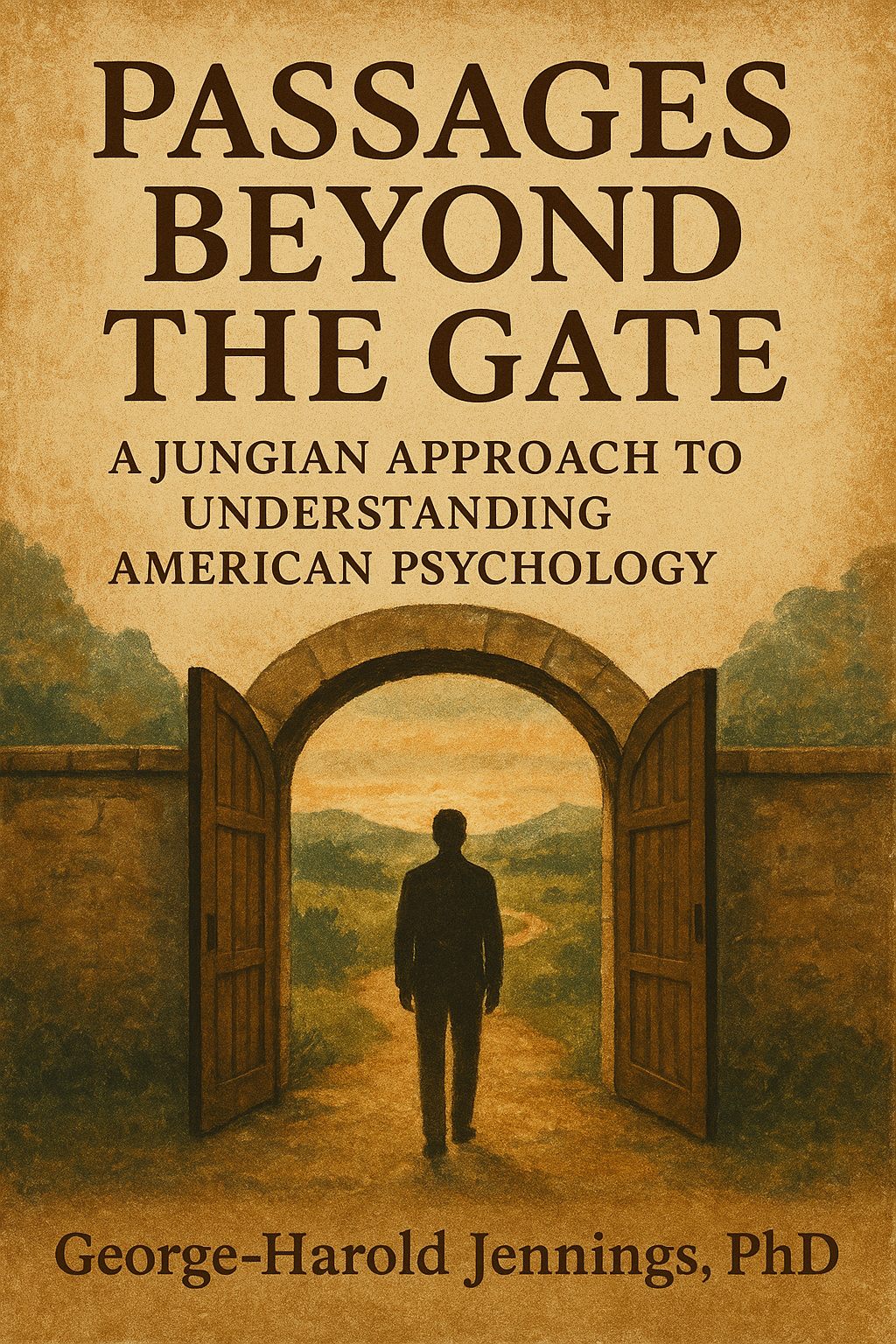
American psychology today stands at a critical threshold—one marked by increasing fragmentation on the one hand and a growing call for integration on the other. Across diverse traditions, an emerging movement seeks a more unified and adequate understanding of the human being, as reflected in the work of William James, Carl Rogers, Abraham Maslow, Rollo May, Linda James Myers, and Ken Wilber. What unites these perspectives is the recognition that the human psyche cannot be reduced to any single method of inquiry, but must instead be understood as a complex, layered, and dynamic whole. It is within this broader movement that Passages Beyond the Gate: A Jungian Approach to Understanding American Psychology situates itself, proposing that American psychology moves toward greater wholeness only when it fully integrates the transpersonal, spiritual, and culturally grounded dimensions of human life. The book joins in on a broadened vision of psychological understanding by arguing that American psychology can move toward greater wholeness only when it fully acknowledges the transpersonal and spiritual dimensions of human life.

Drawing on Jungian depth psychology while remaining in dialogue with contemporary developments in behavioral and cognitive science, neuroscience, psychodynamic theory, and humanistic–existential psychology, the book suggests that the discipline has long struggled with fragmentation precisely because it has often marginalized questions of meaning, spiritual development, and the deeper symbolic journey of the psyche.

Over the past decade, fragmentation within American psychology has only intensified. Compounding this condition is the growing influence of AI-driven algorithmic reductionism—the view that the human being may be reduced to little more than a set of predictable data points. The field now finds itself stretched across behavioral-cognitive models, neurobiological reductionism, and psychodynamic, humanistic, and existential approaches in both theory and practice. It also encompasses algorithmic behavioral prediction—the application of mathematical models and data to forecast behavior—as well as strictly evidence-based approaches within positive psychology. Trauma-centered practices, while invaluable, can at times risk organizing identity around injury rather than possibility if not held within a broader developmental frame. Amid these divergent developments is a renewed, though still limited, interest in spirituality and meaning-making.

As psychology fragments into competing frameworks and reduces the human being to data, it risks losing sight of the full depth, meaning, and possibility of human existence.

Each of these movements carries genuine insight; yet, in their relative isolation from one another, they have contributed to a profession that struggles to articulate a coherent vision of the human being. The modern psychologist—unless choosing to privilege certain roles over others—is thus called upon to be scientist, healer, technician, and, at times, a spiritual companion—often without a unifying framework capable of holding these roles together.

In his writings, Jung (1971) identified and described four psychological functions: sensation, thinking, feeling, and intuition. Sensation establishes what is present; thinking determines what it is and how it can be understood; feeling evaluates its value; and intuition perceives its deeper significance, origin, potential direction and/or possibilities. Passages Beyond the Gate uses these functions as the basis of its theoretical framework, thereby advancing a holistic and structurally integrative approach.

Consider the life of an individual who begins therapy through the lens of trauma—an approach modern clinical practice often enters through the body, regulation, and somatic awareness (sensation); or through neuroscience (sensation), or behavior modification (primarily sensation, with elements of thinking). Over time, the individual may gain cognitive insight (thinking), come to identify one’s values (feeling), and eventually confront deeper questions of meaning, purpose, interrelatedness, and possibilities (intuition). At each stage, a different psychological framework proves helpful—but none alone proves sufficient.

Wholeness begins when we stop choosing between perspectives and start integrating the full complexity of the human experience.

True healing occurs only when these perspectives are no longer experienced as competing explanations, but as complementary layers within a larger understanding of the self. What begins to emerge at this point is not merely an eclectic blending of approaches, but a structurally integrative framework of the psyche—one in which biology, behavior, cognition, values, symbolism, consciousness, community, and meaning are understood as distinct yet interdependent dimensions of human experience.

Passages Beyond the Gate advances precisely this model: a developmental, meta-theoretical integration of the psychological functions, in which sensation, thinking, feeling, and intuition are understood not as isolated capacities, but as organizing principles capable of holding together the scientific, clinical, cognitive, emotional, value-laden, symbolic, and transcendent domains of psychology within a single, coherent vision. A developmental model understands the human being not as fixed, but as an unfolding process in which different ways of knowing—empirical, rational, emotional, intuitive, and transcendent—emerge over time and call for integration.

An Unfolding Vision for Psychologists

By emphasizing the importance of the neglected transpersonal, spiritual, and meaning-making dimensions into psychological thought and practice, Passages Beyond the Gate outlines a path forward in which one vision of the modern psychologist among several that shape the contemporary field recognizes the human search for meaning, the transformative potential of the spiritual journey, and the necessity of integrating empirical science with the inner, symbolic, and transpersonal dimensions of experience. In doing so, the work points toward a future for psychology that is both scientifically grounded and psychologically complete as well as capable of addressing not only the mechanisms of mind and behavior but also the deeper existential and spiritual needs that shape the human condition.

For decades, American psychology has lived in fragments that remain divided among powerful and compelling advances in our understanding of human nature, led by scientific approaches inclusive of the theories and frameworks of the behavioral, cognitive, and biological, as well as the insights offered by psychodynamic, and humanistic-existential approaches. But what happens when we finally bridge the gap between science and the intuitive soul? We will stand in the presence of a psychology closer by far to completion than not.

A Rare Trajectory for a Book

In an era when AI, neuroscience, and contemplative traditions are converging in unexpected ways—though it is still more of a dialogue than a full integration, Passages Beyond the Gate offers a symbolic and psychological architecture capable of holding these developments. Although it is a layered work: existential, rich in metaphors, and archetypal symbolism, Passages Beyond the Gate, first runner-up in the Eric Hoffer Book Award Spiritual Category, and Montaigne Medal finalist in 2011, is ultimately a meta-theoretical critique of American psychology.

In a review of the monograph originally published in 2010, James Hollis observed: “In Passages Beyond the Gate, Dr. Jennings calls American psychology to accountability for its own blind spots.” Chief among these, Hollis suggested, is the discipline’s failure to recognize the importance of engaging the intuitive and spiritual dimensions of the human journey which is an essential aspect of human nature. As a result, questions of meaning have too often been set aside, contributing to a psychology that is both fragmented and incomplete.

Writing in the December 2025 issue of the Journal of Transpersonal Psychology, Volume 57 No.2, the premiere journal in the field, Beth Cooper Tabakin, Ph.D., shares a personal shift. She notes that the book “personally and professionally changed me.” She characterizes the book as a “punctuation point to healing possibilities” and a “gem” for anyone interested in personal growth and a more expansive view of psychology as a discipline.

Commenting on the book fifteen years ago, James Hollis’s early recognition finds meaningful continuity in the 2025 review published in the Journal of Transpersonal Psychology by Beth Cooper Tabakin, whose reflections speak not only to the enduring relevance of Passages Beyond the Gate, but to its lived impact. That the work continues to be engaged: first through Hollis’s interpretive lens and now through Tabakin’s personal and professional response suggests a trajectory that is less episodic than cumulative.

That these reviews have emerged fifteen years apart feels symbolically fitting. The book was written to speak across multiple landscapes—temporal, personal, cultural, and archetypal—and its reappearance in professional discourse suggests that the questions it raises have ripened rather than faded.

When science, meaning, values and consciousness meet, psychology becomes equal to the human being it seeks to understand.

Passages Beyond the Gate may be understood as a meta-theoretical model in that it does not propose a new psychological theory among others, but rather articulates a structurally integrative framework through which the diverse and often competing theories of psychology can be understood as partial expressions of a more comprehensive vision of the human being. The work seems to be finding its readers at moments when they are most prepared to engage its deeper implications.

I am deeply grateful to the Editorial Board of the Journal of Transpersonal Psychology for publishing a retro review of my book, and to Dr. Tabakin for the care and seriousness with which she approached the work. Together, the moments of 2010 and 2025 stand not as isolated acknowledgments, but as part of an unfolding recognition of Passages Beyond the Gate—a book that speaks to the individual’s personal journey while also offering a diagnosis of the fragmented state of American psychology and an invitation to participate in its ongoing healing.

Foundations & Further Reading
The works listed below reflect the major streams of thought that have shaped modern psychology—along with those that point beyond its current fragmentation. Organized thematically, they mirror the movement from empirical science to depth, meaning, and ultimately, transpersonal integration.


Cognitive, Behavioral, and Contemporary Scientific Psychology
(Empirical Foundations of Modern Psychological Science)


Kahneman, D. Thinking, Fast and Slow


Hayes, S. C. Acceptance and Commitment Therapy


Christian, B. The Alignment Problem


Zuboff, S. The Age of Surveillance Capitalism


Neuroscience, Mind–Body Integration, and Trauma
(The Emergence of Embodiment and Psychophysiological Healing)


Porges, S. W. The Polyvagal Theory


Siegel, D. J. The Developing Mind


van der Kolk, B. A. The Body Keeps the Score


Levine, P. A. Waking the Tiger: Healing Trauma


Humanistic and Existential Psychology
(The Turn Toward Meaning, Experience, and Human Potential)


Maslow, A. H. Toward a Psychology of Being


Rogers, C. On Becoming a Person


May, R. Man’s Search for Himself


Csikszentmihalyi, M. Flow: The Psychology of Optimal Experience


Depth Psychology and the Structure of the Psyche
(Symbol, Archetype, and the Architecture of the Inner World)


Jung, C. G. Psychological Types


Jung, C. G. The Archetypes and the Collective Unconscious


Transpersonal, Spiritual, and Cosmological Psychology
(Toward the Integration of Psyche, Spirit, and Cosmos)


James, W. The Varieties of Religious Experience


Grof, S. Beyond the Brain

Carhart-Harris, R. L. Research on psychedelic-assisted therapy

Systems, Ecology, and Holistic Worldviews (Reintegrating Mind, Nature, and the Larger Order of Reality)

Capra, F. The Web of Life

Bateson, G. Steps to an Ecology of Mind

Tarnas, R. Cosmos and Psyche

Toward Integration: A Unifying Framework

Jennings, G.-H. Passages Beyond the Gate: A Jungian Approach to Understanding American Psychology

Myers, L. J. Understanding an Afrocentric worldview: Introduction to an Optimal Psychology

Wilber, K. Integral Psychology

Taken together, these works illuminate both the strengths and the limitations of contemporary psychology. They also point toward a broader, more unified vision—one in which scientific insight, depth understanding, and transpersonal awareness are no longer divided, but brought into meaningful dialogue.

______________________________

Links

Dr. James Hollis: https://share.google/m3ct7EcM8Ox5uO9iT

The Association for Transpersonal Psychology promoting a vision of the universe as sacred. https://share.google/CgIugvVWGXNC9Px9h

Dr. Beth Cooper Tabakin: https://www.marineducators.org/united-states/san-anselmo/counseling-services/beth-cooper-tabakin-ph-d

___________________

Download: The link at the top is for downloading an alternative book cover for Passages Beyond the Gate: a Jungian Approach to Understanding American Psychology

© 2026 George-Harold Jennings. All rights reserved. No part of this publication may be reproduced, distributed, or transmitted in any form without prior written permission.

Contact: gjenning@drew.edu


How Consciousness Creates Reality: Physics, and Amit Goswami, PhD

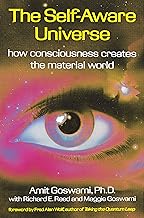
The Self-Aware Universe: How Consciousness Creates the Material World

Few questions are more profound or more controversial than the relationship between consciousness and reality. Is consciousness merely a byproduct of brain activity, as many neuroscientists assume? Or might consciousness play a more fundamental role in the structure of the universe itself? Over the past century, developments in physics, philosophy, and psychology have revived this question in surprising ways. One thinker who has explored this possibility from the perspective of quantum theory is Amit Goswami.

Although I did not realize it at the time, about ten years ago I attended a lecture that would significantly influence the way I think about consciousness and reality. Seated in the front row of a modest lecture room, I waited for the arrival of Goswami. Once the talk began, I was quickly drawn into the ideas he presented. Among the concepts he discussed, none struck me as more thought-provoking than his claim that “consciousness is the ground of all being.”

Goswami, a longtime professor of physics at the University of Oregon, taught theoretical quantum physics for more than three decades before retiring. Although no longer teaching full time, he remains active internationally as a lecturer and author. During his visit to Drew University, he spoke about consciousness and its relationship to matter which is an issue that sits at the intersection of physics, philosophy, and psychology.

When most people are asked to define consciousness, they describe it simply as awareness. Goswami, however, proposes a far more expansive interpretation. In his view (and in the view of a number of philosophers and theorists interested in the implications of quantum theory) consciousness is not merely a byproduct of the brain. Instead, consciousness may be fundamental to reality itself. From this perspective, the material world emerges from consciousness rather than the other way around.

This proposal draws inspiration from philosophical interpretations of quantum mechanics. In quantum theory, physical systems are often described mathematically as existing in a range of potential states until they are measured. Prior to measurement, the system is represented by a wave function, which describes probabilities rather than definite outcomes. Some thinkers have suggested that this peculiar feature of quantum physics raises deep questions about the role of observation and the nature of reality.

At this point, however, an important clarification must be made. Most physicists do not interpret quantum theory as implying that human consciousness literally creates physical reality. In contemporary physics, the transition from possibilities to observed outcomes is generally explained through physical processes such as measurement interactions and environmental decoherence. The mathematics of quantum theory works extraordinarily well, but its deeper meaning remains open to interpretation. For that reason, the suggestion that consciousness plays a fundamental role in reality should be understood primarily as a philosophical interpretation of quantum theory rather than a settled conclusion of physics itself.

Despite remarkable advances in neuroscience and physics, the nature of consciousness remains one of the most challenging questions in modern science. Increasing numbers of scholars across disciplines, including psychology, neuroscience, physics, biology, and computer science have taken renewed interest in the problem. In fact, the contemporary study of consciousness represents something of a return to earlier concerns in psychology. Before the rise of strict behaviorism in the early twentieth century, consciousness itself was considered a central topic of psychological inquiry.

Today, neuroscientists and psychologists commonly ask: What is the relationship between consciousness and the brain? Many researchers attempt to identify the neural processes that correlate with conscious experience. Few would deny that brain activity and consciousness are closely related. The deeper question, however, is whether consciousness is entirely produced by the brain or whether the brain might instead participate in a larger system of mind?

Philosophers often frame this issue in terms of bottom-up versus top-down models of causality. In a bottom-up view of the universe, matter is fundamental. Elementary particles combine into atoms, atoms into molecules, molecules into biological structures, and ultimately into complex systems such as the human brain; thus, from which consciousness is thought to emerge.

In contrast, a top-down perspective suggests that consciousness may be more fundamental than matter. In this view, the physical universe might arise within a deeper field of consciousness rather than producing consciousness itself. Goswami’s proposal belongs to this latter tradition, which resonates with certain philosophical forms of idealism which is the idea that mind or consciousness is ultimately primary in reality.

Indeed, the suggestion that consciousness may be fundamental is not entirely new. Philosophers have long explored the possibility that mind plays a central role in the structure of reality. Thinkers such as George Berkeley argued centuries ago that reality ultimately depends upon mind.

In psychology, a related insight appears in the work of Carl Gustav Jung. Jung’s depth psychology suggests that human experience is shaped not only by physical processes but also by the symbolic and meaning-making activity of the psyche. From this perspective, consciousness cannot be understood solely in terms of neural mechanisms as it must also be considered within the broader context of psyche, meaning, and the structures of human experience.

Jung himself occasionally speculated about a deeper level of reality in which psyche and matter might ultimately be connected. In his later writings, he suggested that both mental and physical phenomena could arise from what he described as a “psychoid” level of reality, a domain that lies beyond the simple division between mind and matter. From such a perspective, the relationship between consciousness and the physical universe may be more intricate than either strict materialism or simple idealism can fully explain. Questions raised by modern physics about the nature of observation and reality therefore intersect in interesting ways with long-standing psychological reflections on the relationship between psyche and the world it experiences.

These philosophical questions often arise in the classroom as well. During a lively discussion in one of my personality theory courses, a student argued strongly that consciousness must arise from the physical brain, describing it as a byproduct or epiphenomenon of neural activity. He was somewhat surprised when I explained that some philosophers and scientists have entertained the opposite possibility arguing that consciousness may not simply be produced by the brain, but that the brain itself could be an expression or instrument of consciousness.

If one adopts such a perspective, then intriguing questions naturally arise. If consciousness is fundamental, then how did the universe come into existence? Did consciousness create the universe? What role might consciousness have played at the beginning of cosmic history? For Goswami, the answer points toward a universal or cosmic consciousness underlying reality. Some philosophers and theologians have drawn parallels between this idea and classical concepts such as the Prime Mover or the ultimate ground of being which are terms that many traditions associate with the idea of God.

Goswami explores these ideas in his book The Self-Aware Universe, where he presents his philosophical interpretation of quantum theory and its implications for understanding consciousness. Whether one ultimately agrees with his conclusions or not, his work raises provocative questions about the nature of mind, matter, and the deeper structure of reality.

For readers interested in exploring these ideas further, Goswami’s writings offer a detailed account of his perspective. His work challenges us to reconsider a question that has intrigued philosophers, scientists, and theologians for centuries: namely, “Is consciousness simply a product of the universe, or might the universe itself arise within consciousness?”

Readers interested in learning more about his work can visit his website at:: http://www.amitgoswami.org/


© 2013 George-Harold Jennings. All rights reserved. No part of this publication may be reproduced, distributed, or transmitted in any form without prior written permission.

Contact: gjenning@drew.edu